View of Diamond Lake from Roman's home studio in
Minneapolis.
Minnesota, the land of 10,000 lakes, provides an inspiring environment for
artists.
< Back to History Menu | Main Menu | Site Map | Search | Contact
ROMAN VEROSTKO
Transition: from ideas in mind to ideas
in code

View of Diamond Lake from Roman's home studio in Minneapolis.
Minnesota, the land of 10,000 lakes, provides an inspiring environment for artists.
MINNEAPOLIS. By 1968 my spiritual journey led me to life outside the cloister. No longer able to fully embrace beliefs that bound me to the cloister I departed St Vincent in the summer of 1968 and joined the humanities faculty at the Minneapolis College of Art and Design. I taught world art history, maintained an active studio and was drawn into the world of emerging electronic technologies via Control Data, Honeywell and Univac
Imaging the Unseen (from c. 1969 to c.1980)
While I had studied programming in 1970 and was involved with experimental electronics, I continued to be deeply engaged with painting and drawing from 1968 to 1975. My explorations grew from an interest in exploring new pathways in my spiritual journey.
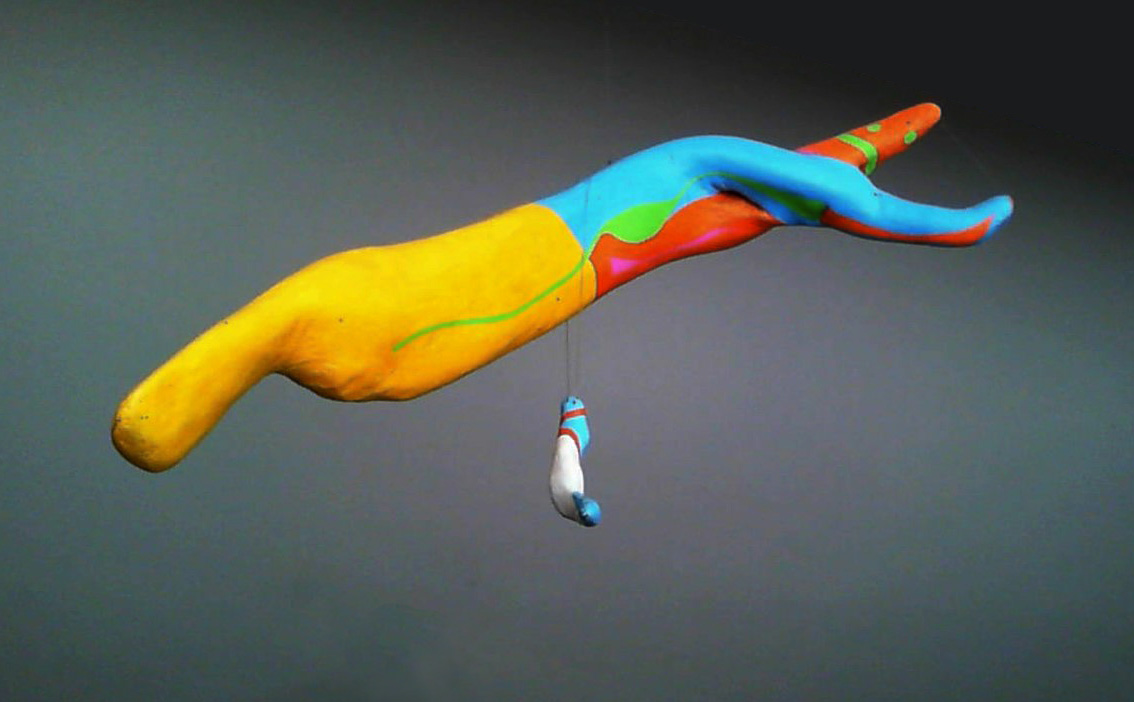
Mobile Eikon: Mother & Child , c. 1969-70. Driftwood, acrylic paint, nylon, brass fitting.
Length (mother) 21", length (child) 4". vertical mobile space 16" plus length to ceiling.Perhaps this Eikon speaks to one way I maintained a continuity with my past as I wrestled with a radical new way of life in Minneapolis. < Click image above for video>
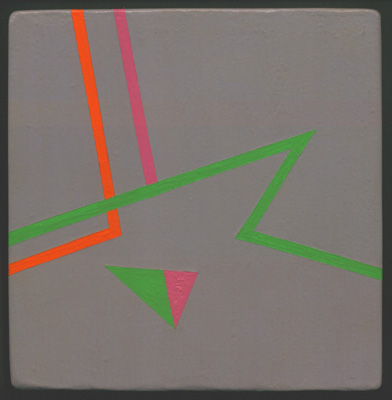
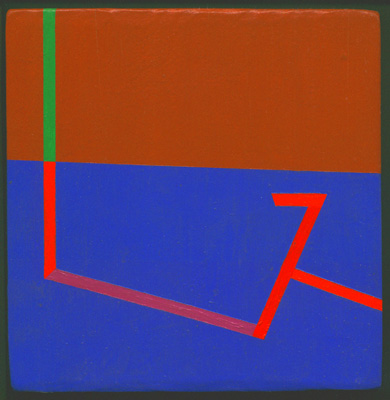
Constructivist Eikons 1968 - c.1972
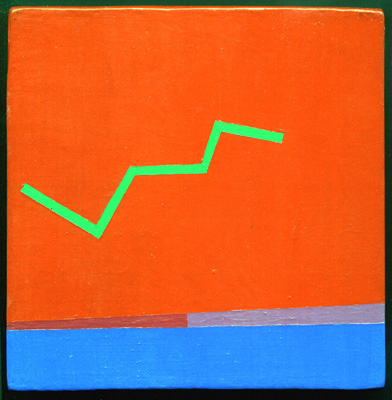
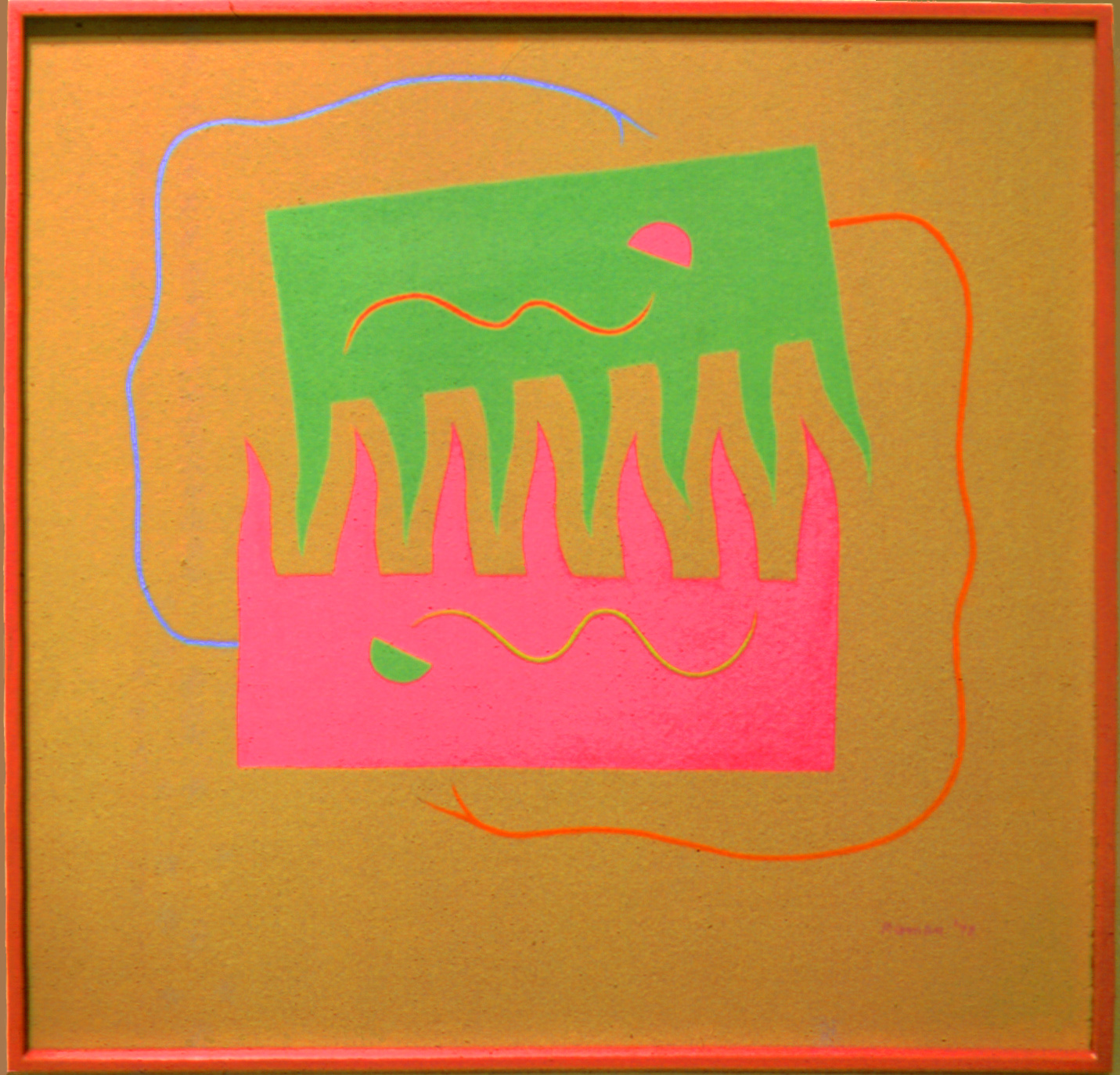
Eikon Series, #101, 1968-1970.
6" by 6", wood.
acrylic on gesso ground.
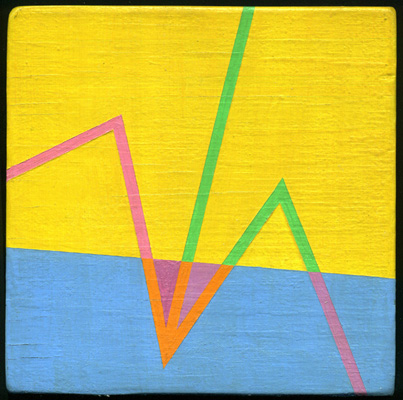
.Eikon Series, #111, 1968-1970.
6" by 6", wood.
acrylic on gesso ground.
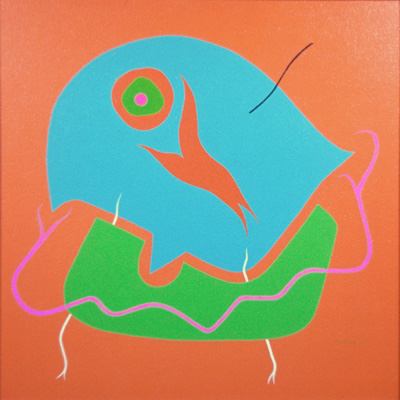
.My first new work following my monastic period yielded a series of small icons created with carefully constructed color relationships. Crafted with a gesso base on small panels these works were designed as portable icons with slip cases so they could be carried by their owners in the manner of ancient devotional art.
.
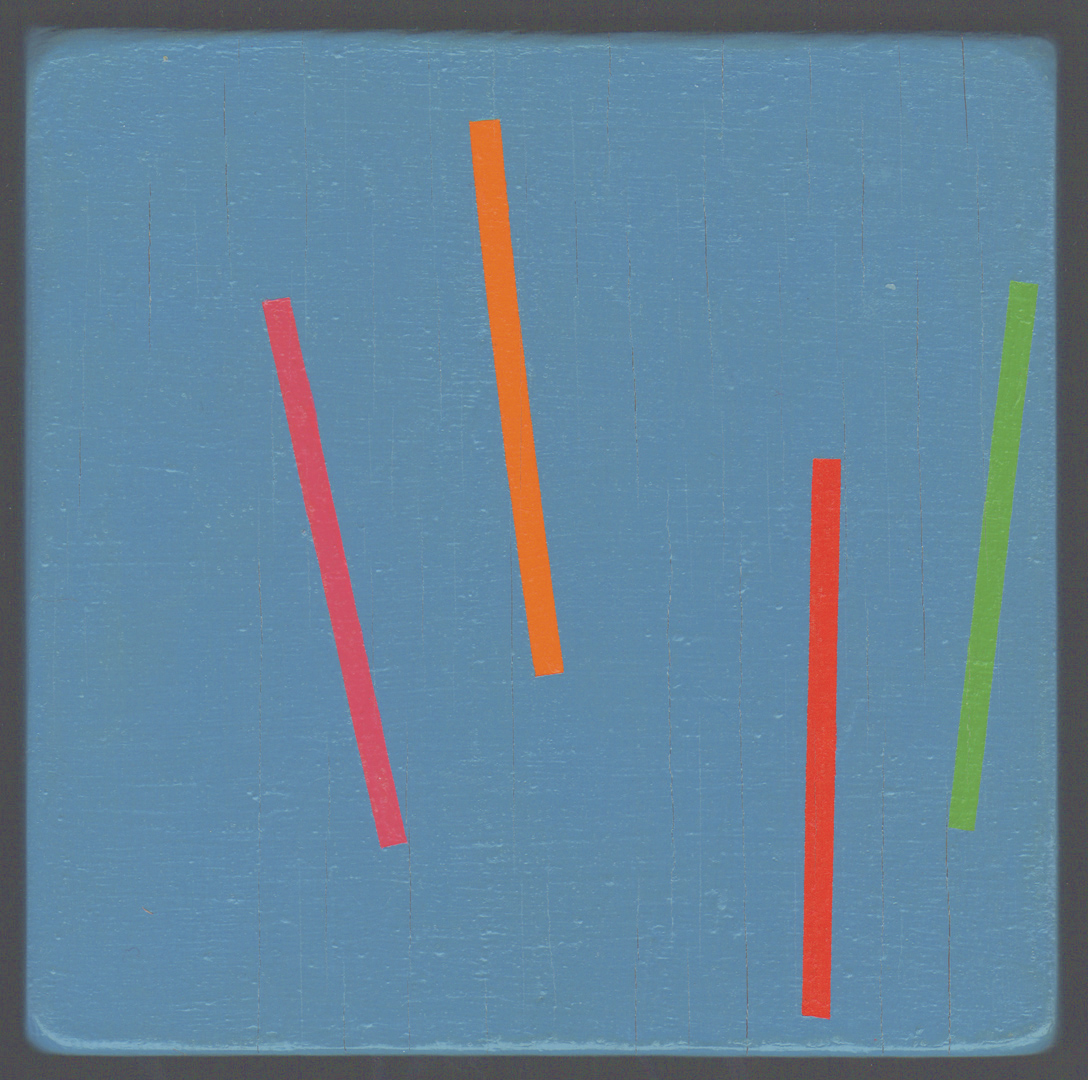
Eikon #104, 1968-1970.
6" by 6", wood.
acrylic on gesso ground.#Eikon #106, 1968-1970.
6" by 6", wood.
acrylic on gesso ground.Following my radical change of life style in 1968, these works represented a quest for art objects that could lead to an interior experience that transcended the material object. Although never exhibited at that time, these works represented one of several experimental directions that provided important ground work for his later work with coded algorithmic procedure.
Eikon #103, 1968-1970.
6" by 6", wood.
acrylic on gesso groundEikon #105, 1968-1970.
6" by 6", wood.
acrylic on gesso ground
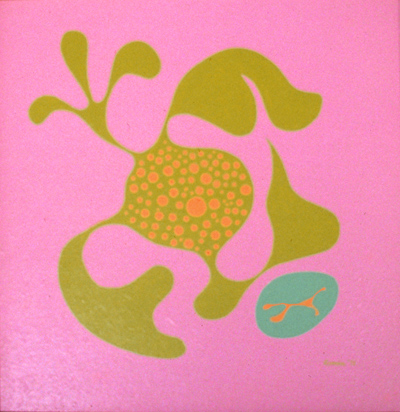
Playful Imagination & Automatism
Playing with the power of human imagination I created a plethora of images that were hidden and largely unknown until 2008 when I resurrected them for a major project. I digitized selected pen & ink drawings and composed them with digital technologies for a two story "Upsidedown Mural" in the Fred Rogers Center for Early Childhood Learning at St. Vincent College in Latrobe, PA. For the dedication of the new Center I also created an Upsidedown Book.
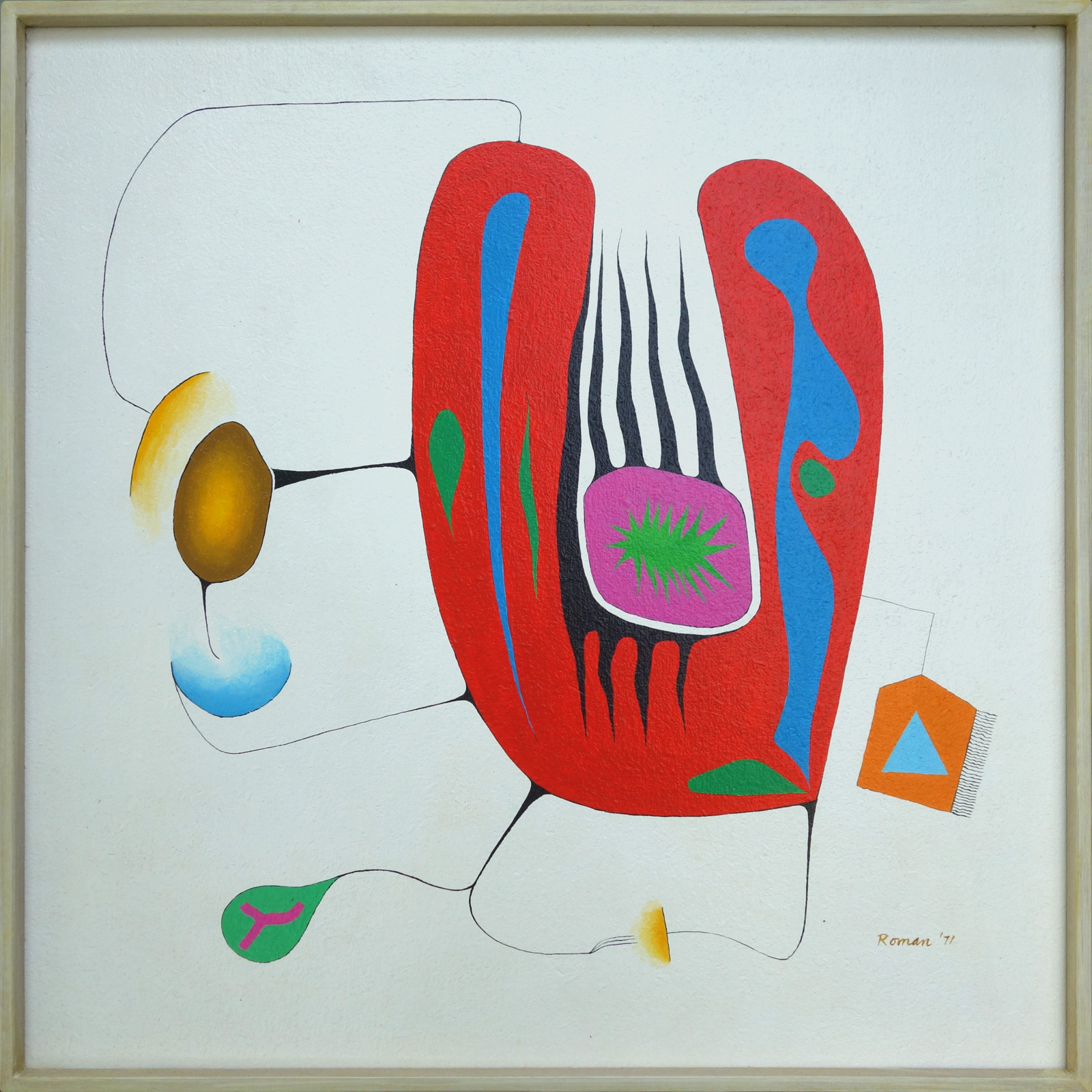
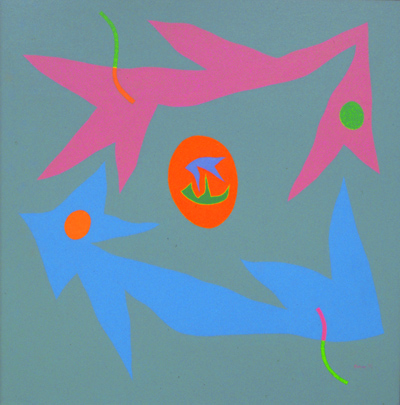
Eikon # 203 1971. 24"' by 24"", wood.
acrylic on gesso ground. (M.Fiterman Collection)Eikon # 205 1971. 24"' by 24"", wood.
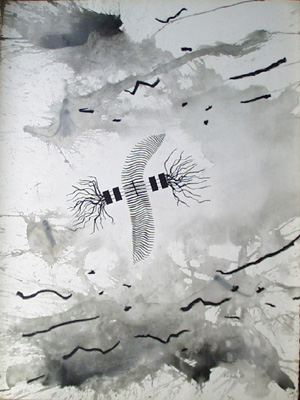
acrylic on gesso ground.These paintings and drawings represented an effort to bring forth images of the "unseen" from those segments and bits of visual stuff that lay hidden from our conscious self. The goal has always been to bring forth visual form in an art object that does not refer to "other" reality. For these works I relied more on an earlier practice of working with unedited drawing that was semi-consciously executed. The tension between carefully thought out "line-making" decisions and the spontaneous flow of the pen or the expressive gesture of the brush played a central role here and later in my algorist work. These works attempted to create visual worlds that could stand on their own without reference to other reality. Continuity with this quest may be seen in the Cyberflowers I achieved as an algorist over 30 years later.
Eikons shown in Imaging the Unseen, West Lake Gallery, Minneapolis, 1972.
Technique and Intention: Masonite boards were sanded and covered with white gesso as the painting ground. The white ground provided the base for better color control and luminosity. Very subtle color relationships course throughout these paintings. Color opposites were often mixed with similar value relationships to achieve simultaneous contrasts where the color fields meet. Mixed at approximately the same value, the fields achieve visual vibration at their borders (think of color value equivalents on a black & white scale).
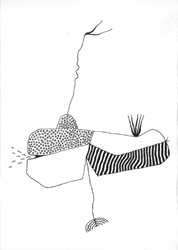
Untitled. 1972. Pen and ink drawing used for the invitation. Original size about 5" by 7"
| Statement from Verostko's 1972
show at the Westlake Gallery (Minneapolis):
Imaging the Unseen a series of works shown in Minneapolis and also in London Ontario See: Review by Don Morrison in the Star & Tribune, 1972. Artist's statement for the 1972 show at the Westlake Gallery (Minneapolis): "Every human person bears within herself a jewel-like capacity - an imagination, a living spirit - which often lies dormant, unable to break through the busyness of everyday life. This human reality remains elusive because its peculiar mode of being transcends verbal and rational categories and we see its sparks come forth only occasionally.
Eikon #6, Acrylic on masonite, 24" by 24"
Roman Verostko, Minneapolis, November 1972 *Note
on the term "icon" (eikōn):
In
the traditions of Western Christianity the Greek term for image, "icon"(eikōn),
had taken on a very special, rather "holy" or "sacred" meaning.
As an art historian I grew to hold a reverence for "Icons" that were
understood to be devotional images that were venerated..
Up until about 1984 an "icon" elicited a special respect and reverence
even though it was not always used for religious art.. When used in a
"secular" way, as in the "iconic" hero, it had a special meaning reserved
for an exemplar. After 1984, with the commercialization of
Graphical User Interfaces (GUI's) on computer screens, the term
" icon" came to refer to the commonplace computer icon. In the 1990's
I struggled with accepting the term "icon" for these images. To call these
small screen images "icons" was an uninformed usage that corrupted the term.
We lose something when the traditions of earlier generations fade in our
language. It is somewhat like the "extinction" of a species.
(This Note added ca. 2010) |
< Back to History Menu | Main Menu | Site Map | Search | Contact