< Back: Monastic period menu | Main menu | Search | Contact | Copyright
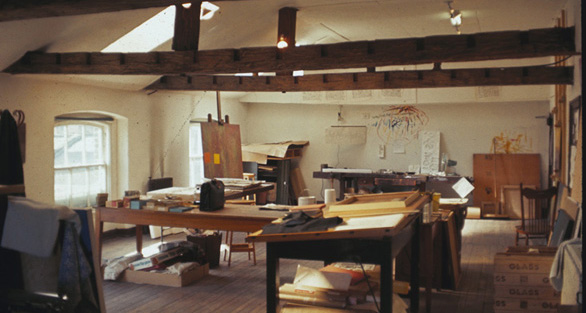
| Monastery Studio at Saint Vincent, 1963-1968
|
|
|
New City Series (1961-1968) & Westmoreland Museum Exhibition (1965)
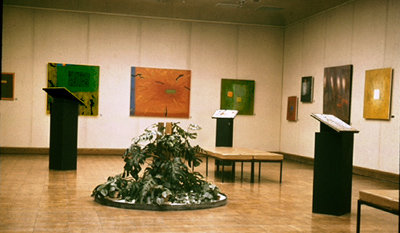
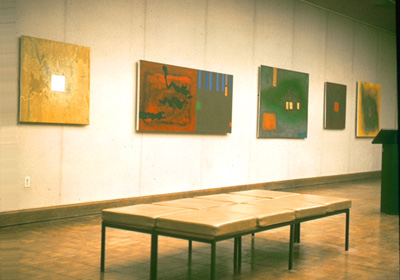
In 1965 the Westmoreland Museum of American Art, known then as the Westmoreland County Museum of American Art, presented an exhibition of my work including many New City paintings as shown below.
|
|
|
|
|
|
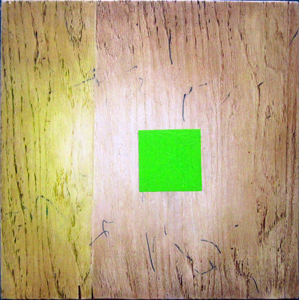
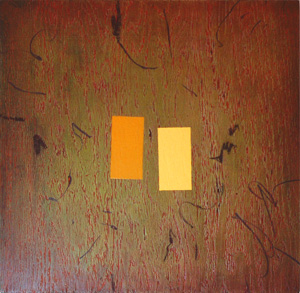
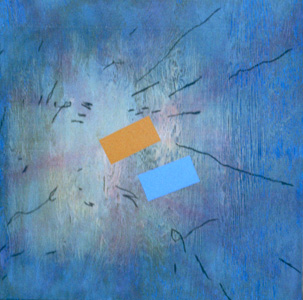
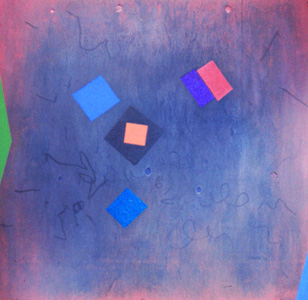
| Above: Slides of New City panels dated 1965 or earlier. The lower right panel is seen in the installation shown below. Works are wood panels primed with gesso and executed with crayon markings and acrylics. |
|
||
|
||
|
THE WESTMORELAND MUSEUM OF AMERICAN ART Greensburg, Pennsylvania April 2 through May 2, 1965 |
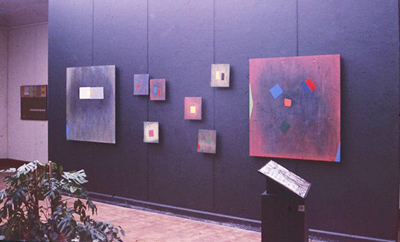
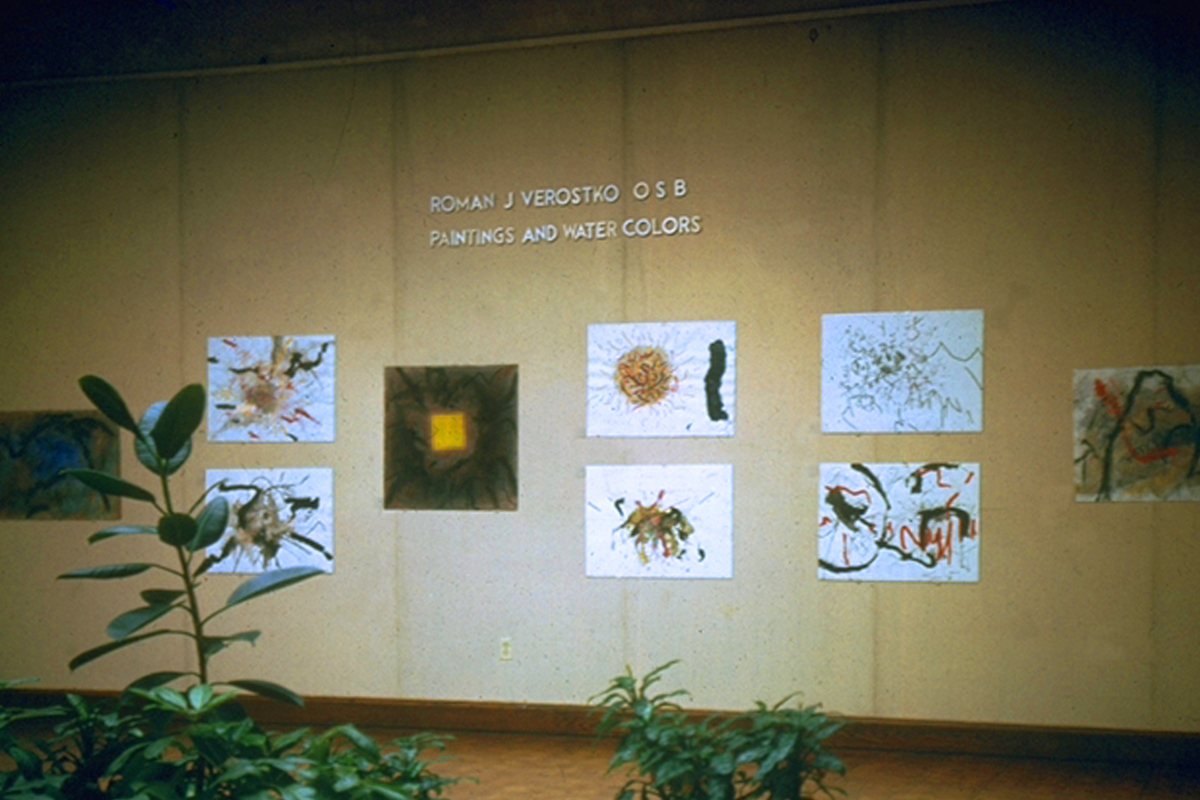
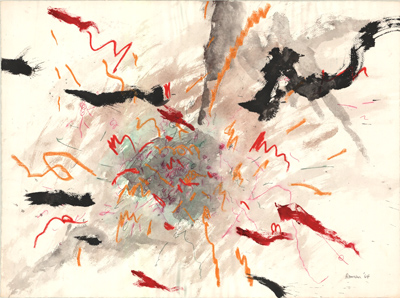
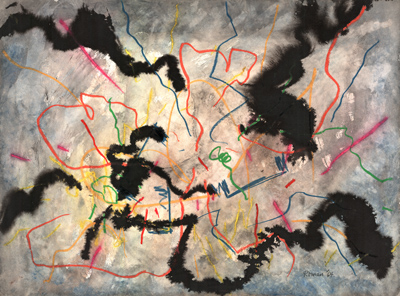
Stephen Joy, who curated this show, had painted the large entrance wall black and arranged it as a "New City" installation. He presented my Paris notebooks on lecterns reminiscent of those used for scripture readings. Stephan understood my monastic life and my aspirations at that time. During my monastic years I viewed life as a transformative journey to a fullness of life in the "Promised Land", the heavenly place viewed as the "New Jerusalem" or the "New City". I attempted to imbed this vision in my artwork as noted in this 1965 exhibition statement:
". . .My paintings are spontaneous emotion; they are also calculated precision; they search to resolve oppositions in a visual dialogue; they are born from the belief that we are growing to a great love that will resolve the ambiguous and deliver us to Peace."
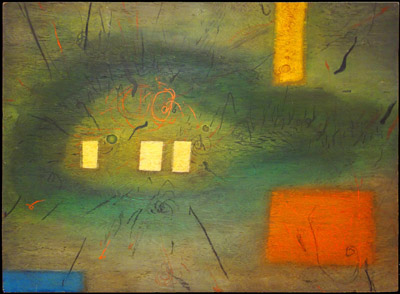 |
Letter to Birmingham, 1963 36" by 60" acrylic, crayon, gesso on wood. Saint Vincent Archabbey |
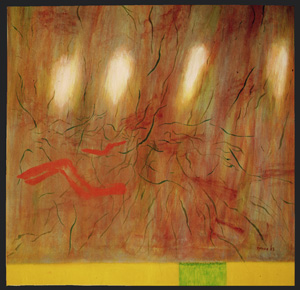
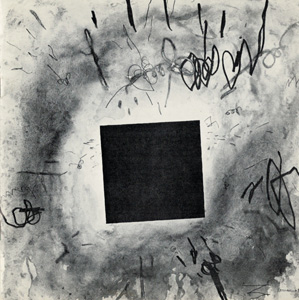
Several works relate to national events of the period such as the church bombing at Birmingham Alabama in 1963 (above). and the assassination of JFK (below). These works were statements of hope for conflict resolution at a time when the United Sates experienced deep unrest with protest over the Vietnam war, racial conflict and radical changes in social mores. These may also be viewed as part of the "New City Series"./
 |
 |
| Homage to JFK, 1963, 4 ft by
4ft wood panel with gesso and acrylic. |
Kennedy Memorial, One Year.
1964, 22" by 22" Water color and crayon on paper.Location Unknown. This was the catalogue cover image. DOWNLOAD CATALOGUE |
OTHER WORK 1963-1968
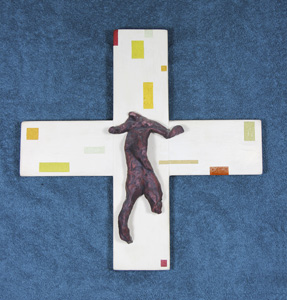 |
Crucifix: clay, wood, acrylic,
14" by 14" Made in January, 1962, while in residence at St. Michael's Parish, West 34th St., Manhattan. This work embodies the ideas informing my art in the 1960's.. It represents my spiritual journey at St. Vincent, a journey that deeply informed the course of my life. |
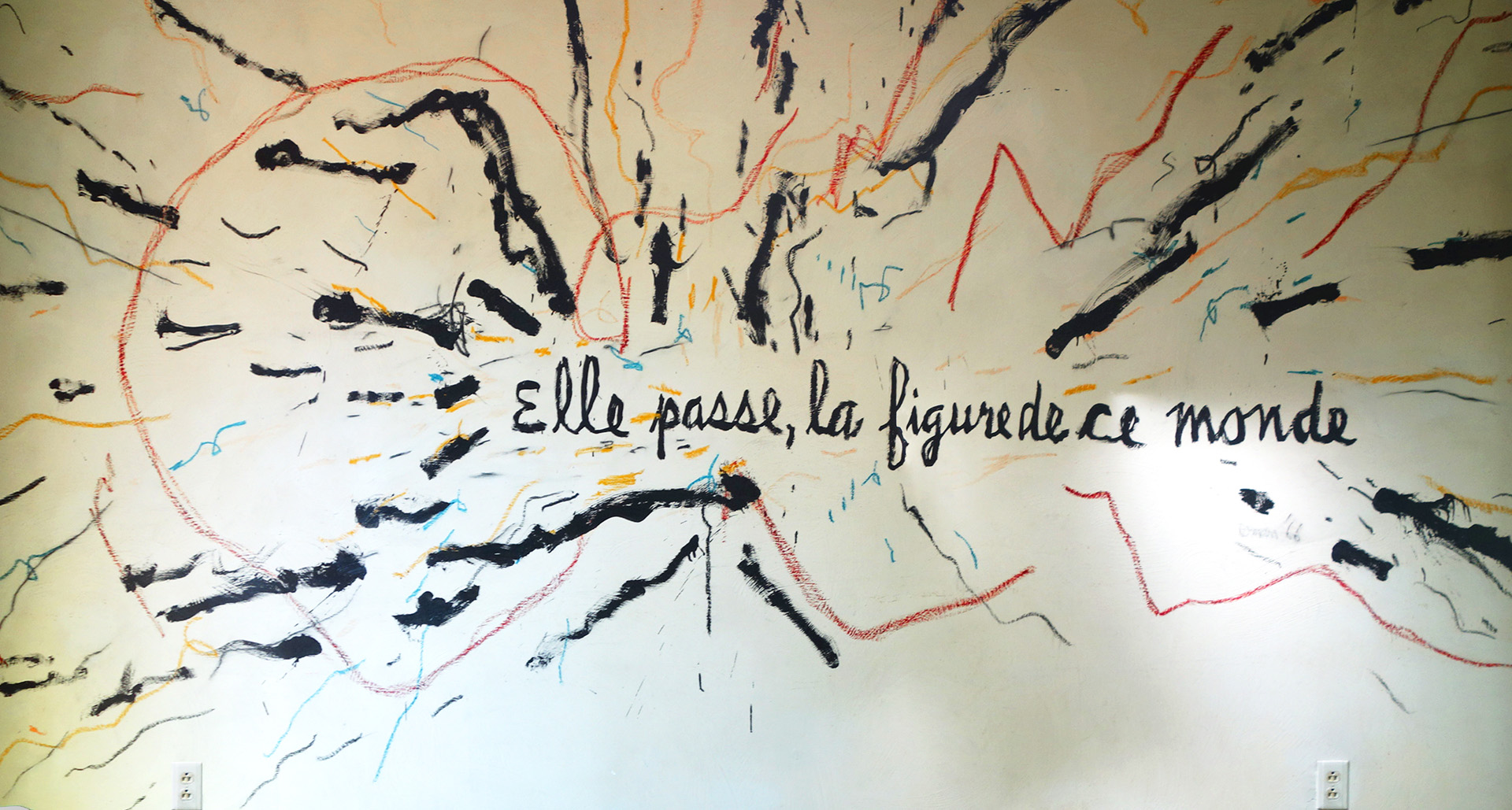 |
Mural, "Elle passe, la figure
de ce monde (The face of this
world is passing)" 1966, ca. 20 ft by 7.5 ft acrylic & crayon on white wall. Home of John & Margaret Gavaler, Pittsburgh, PA. This is one of several versions executed between 1966-68 in the
Washington DC and Pittsburgh areas. Sites included exhibitions and
private homes. This version is the only known extant version in
November 2014. |
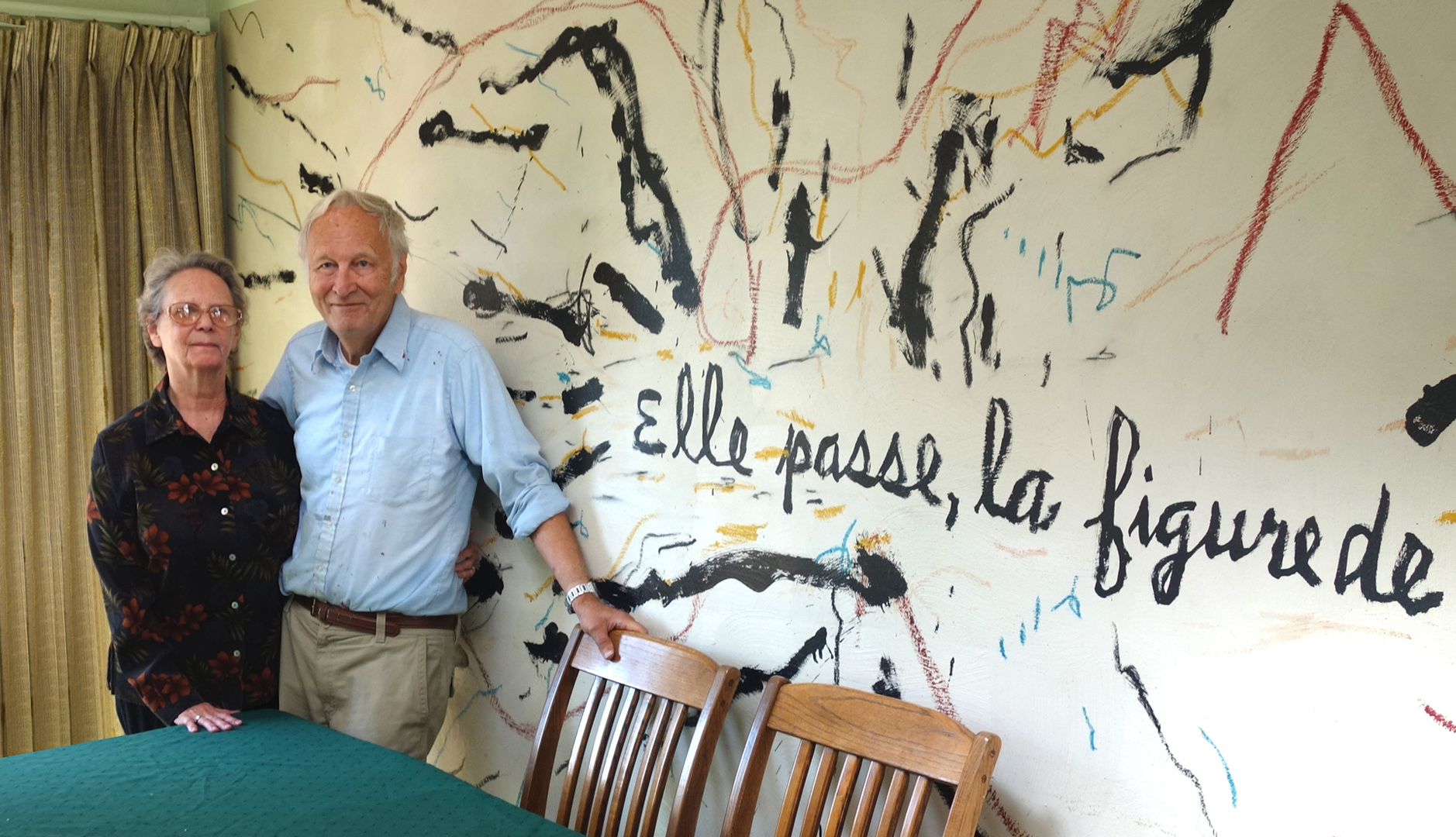 |
John and Margaret Gavaler pose by the mural that served as background for family meals since June of 1966. |
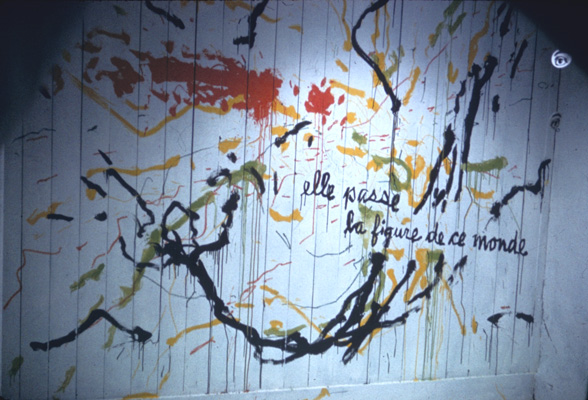 |
Mural, "Elle passe, la figure
de ce monde (The face of this
world is passing)" 1966, ca. 20 ft by 9 ft acrylic & crayon Home of
Elsa & Rolf Von Eckartsberg A small oval object hanging from the upper right corner displays the image of an "eye" drawn in black & white. This was part of a hanging assembly of objects arranged by Elsa. |
Concrete Castings, St. Vincent Monastery
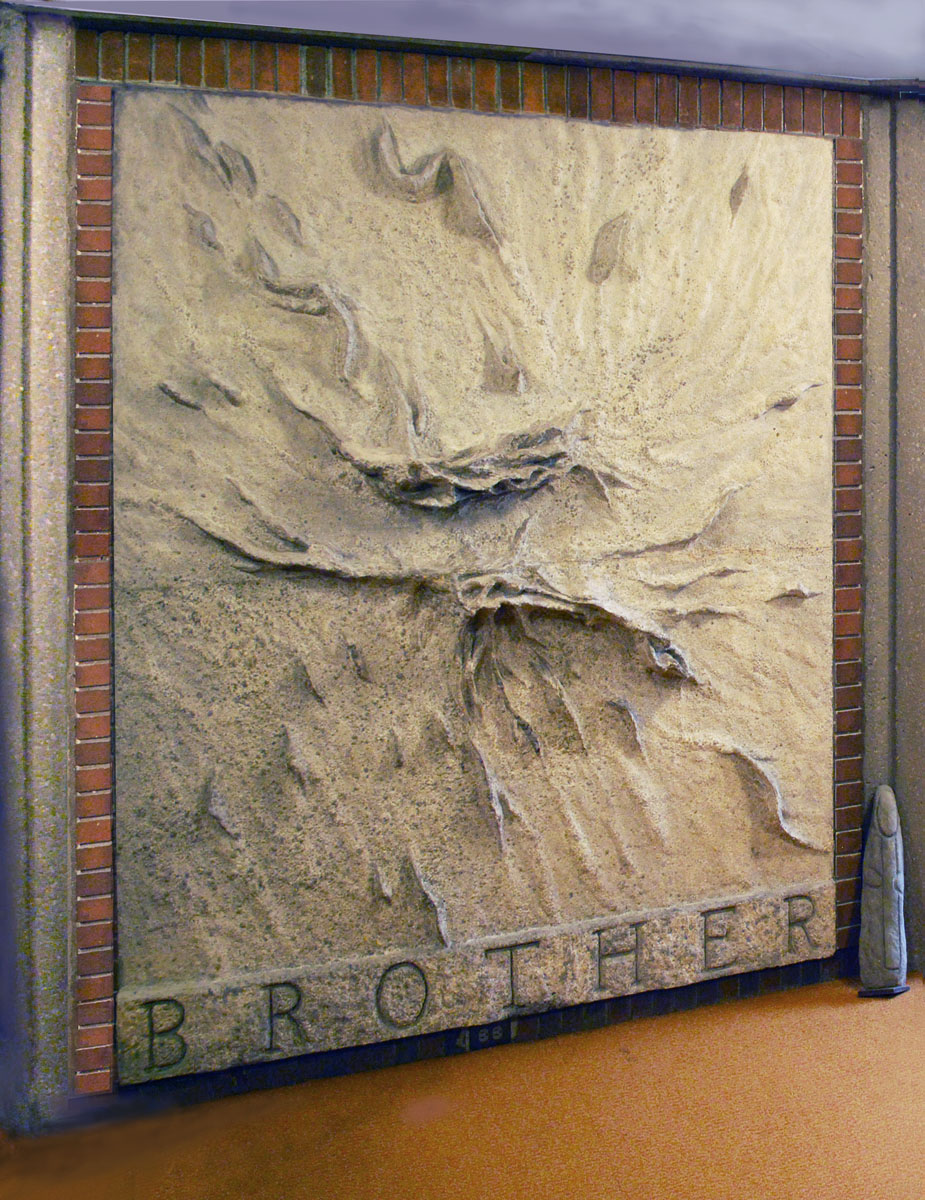
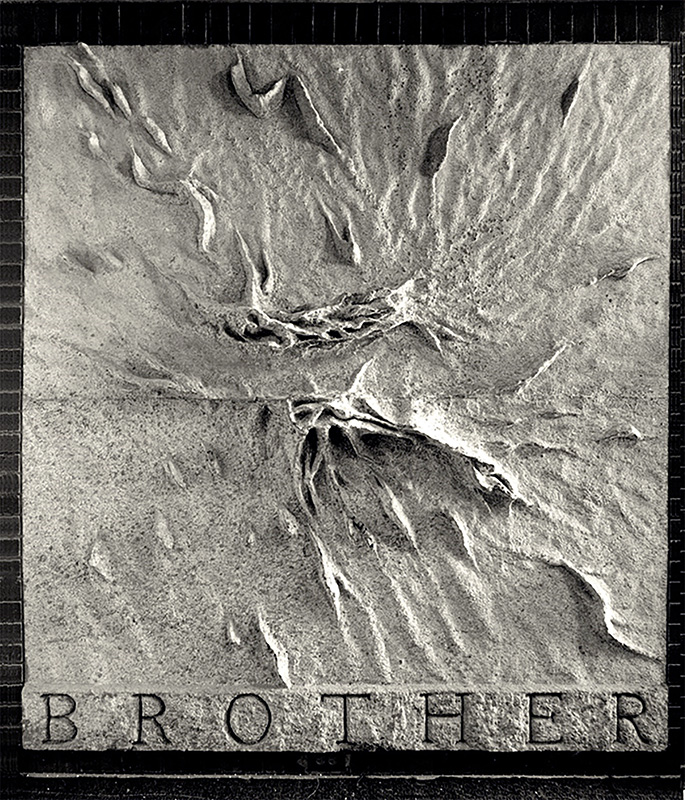
Concrete Castings in New Monastery (1966-1967). The monastery, devastated by fire in 1963, was rebuilt and dedicated in 1967. Tasso Katselas, the architect for this project, came up with the idea of capturing brush strokes in concrete. He suggested that I create molds by using hot irons to burn strokes into thick sheet of Styrofoam. In close collaboration with the architect and the monastic community we created about 30 steel reinforced concrete castings. These castings, imbedded in load bearing walls of the new monastery bear testimony to the creative mind of the architect and a vibrant collaborating community of monks at St. Vincent in the 1960's.
 |
 |
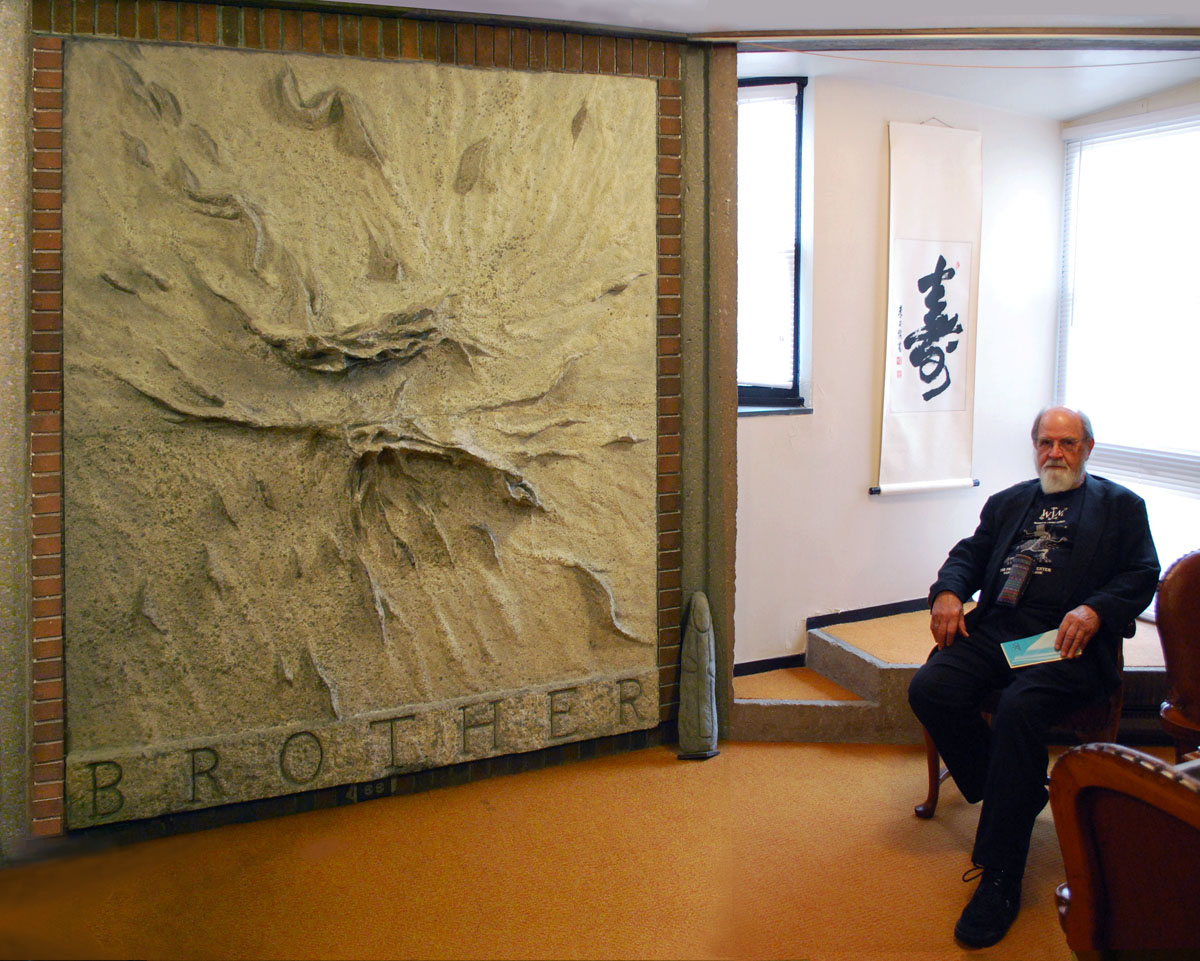 |
Above: Brother 1966-1967. Reinforced concrete casting. 8 feet by 8 feet, Depth: c. 12". Load bearing wall, Archabbot's conference room, St. Vincent Archabbey, Latrobe, PA, USA
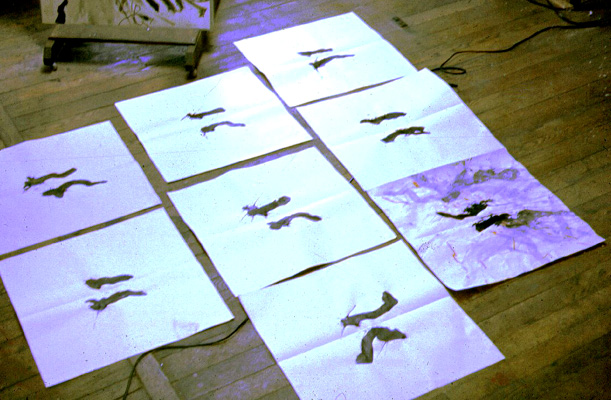
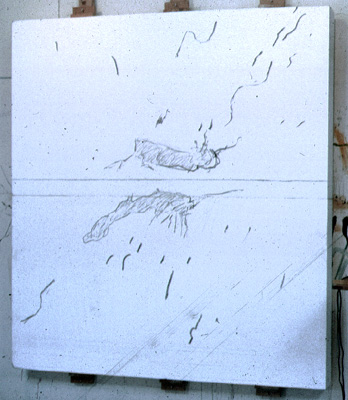
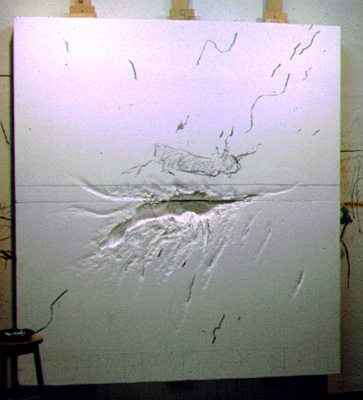
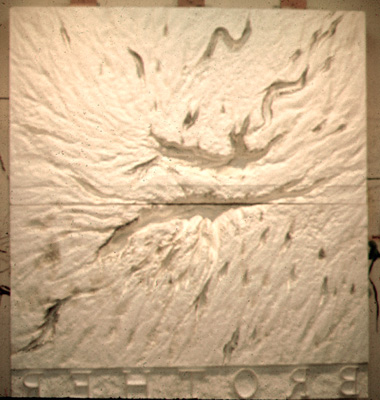
Above left to right: (1) Brush strokes served as model, (2) Styrofoam mold with drawing of strokes, (3-4) Stages in shaping Styrofoam mold. Technique employed hot irons to simulate brush strokes in the mold. (5) finished casting after mold is removed, 1967. (Click on images for larger view)
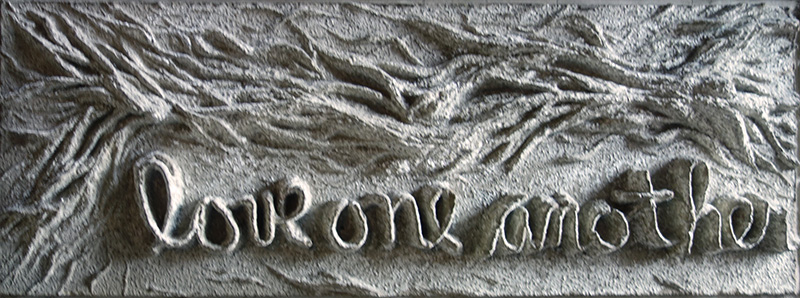

Above: Examples of smaller castings imbedded in walls inside the monastery at various sites. Texts and phrases were chosen by members of the community.
Psalms in Sound and Image, 1966-1968.
In 1966 I began experimenting with electronics. My first project presented electronically synchronized sound and image for a spiritual retreat in the fall of 1966. This retreat, held at a mountain lodge near Uniontown Pennsylvania, evoked experiences that several students described as "transforming". The students, from St. Vincent College and Seton Hill College, had Father Campion Gavaler as their spiritual guide for the retreat..
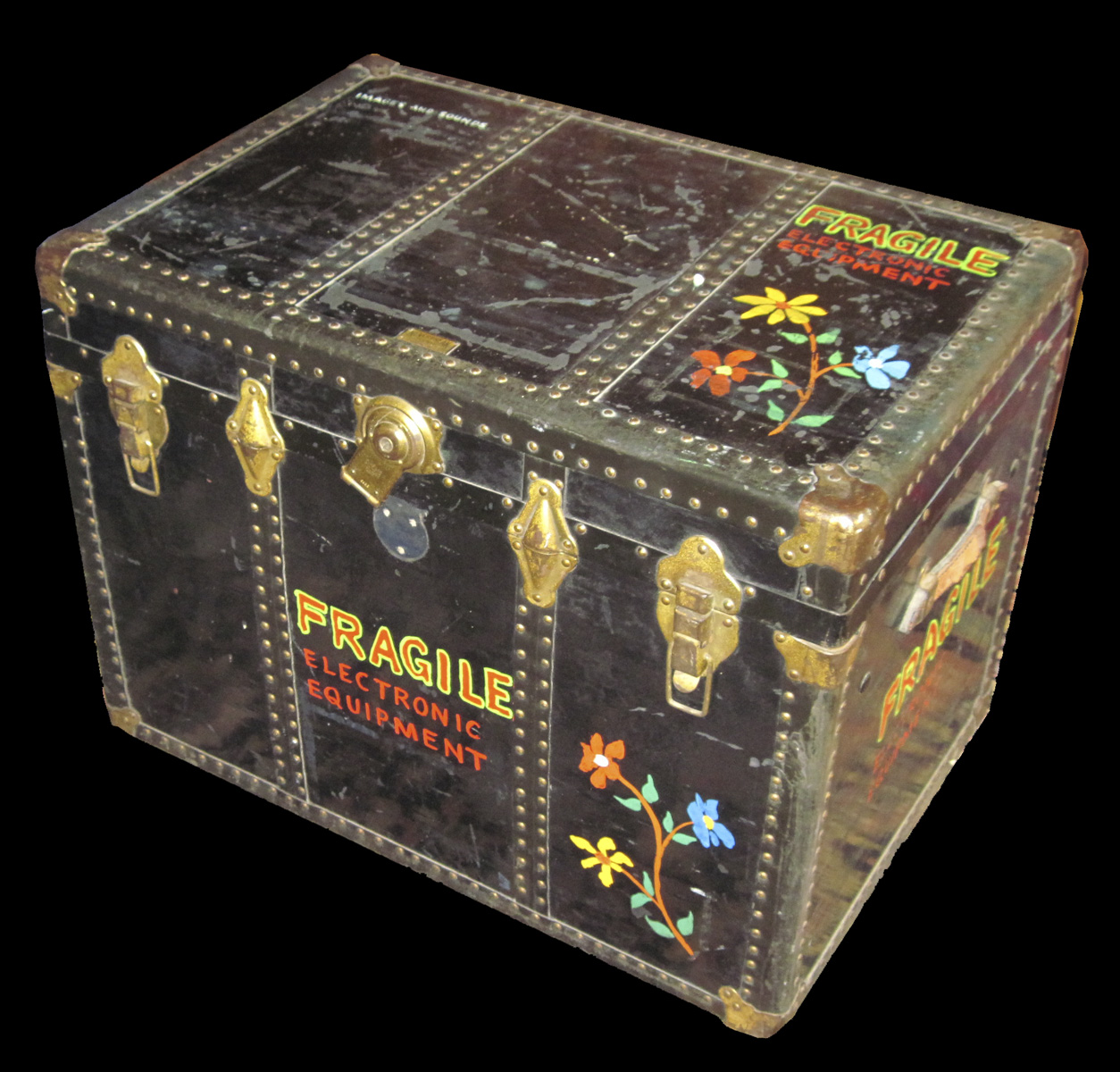
This experimental work included a sound track by Lucia Dlugoszewski and slides composed from my own drawings and photos. Equipment included a Wollensack stereo tape deck, speakers, and two Kodak slide carousels. The music was recorded on one sound track and the other was programmed with a Kodak synchronizer to trigger the slides. With this programming procedure sound and image were electronically synchronized.. Projection from floor to ceiling and amplified speakers provided a memorable audio visual experience.
|
|
|
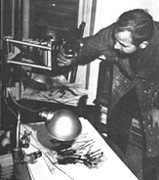
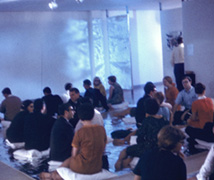
Experiencing the power of emerging new media I set out to create a serious work consisting of four 15 minute units, "The Psalms in Sound and Image". Sound tracks included original compositions by Daniel Lentz, Rembert Weakland (OSB), and Ignatius Purta (OSB). Daniel Lenz had been a student of Rembert Weakland in his college years. Daniel Lentz
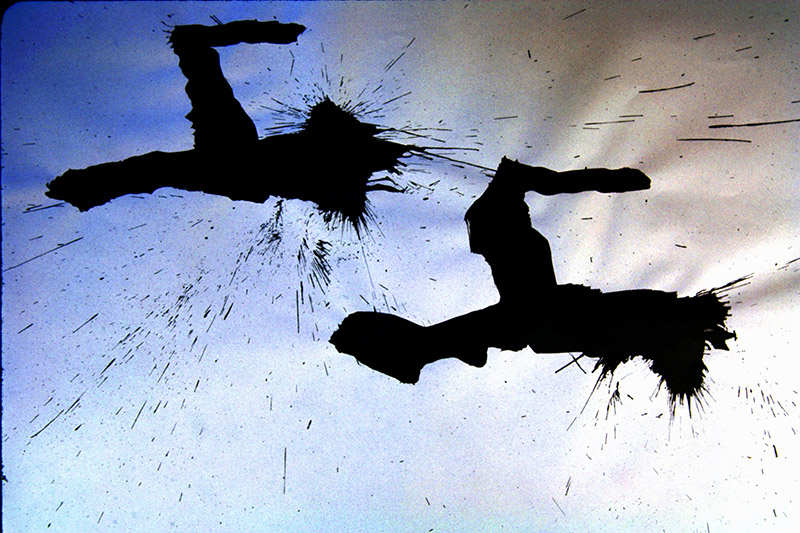
These audio visual psalms were created as 20th Century songs of praise and wonder of the experience of life. Collage photos along with drawings and brief texts flashed in sequences on two screens and timed with original sound tracks. These works, highly evocative, were often presented in the context of spiritual retreats. The show was also shipped with its equipment for presentation in diverse contexts including a traveling gallery show with related drawings.
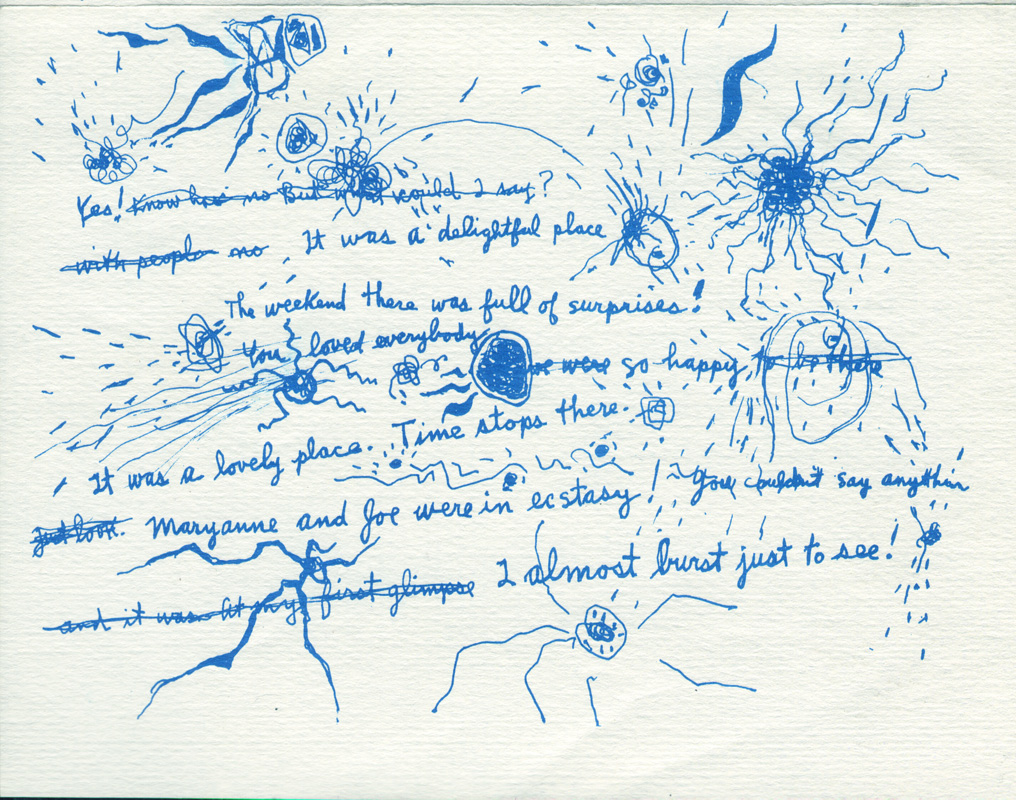
Above: Detail from a
"doodle" used for the back of the program for the Right: Trunk that was used for shipping the audio visual equipment. Roman painted it to have the spirit of a show. Click for larger image. |
 |
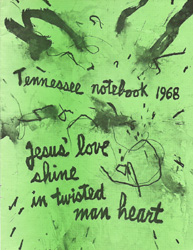
Tennessee Notebook as the Fifteenth Station
Jubilee was a liberal Catholic Journal that presented the cutting edge of theology, art, and literature of the church in the U.S. in the 1960's. Its staff included vibrant Catholic thinkers including brilliant young poets like Ned O Gorman and Bob Lax. Bob Lax had been a close friend to Thomas Merton whose writings and life had a deep influence on our lives.
For their 1968 Easter Issue the editors planned to address the theology of Resurrection. They invited me to create an art work for a Fifteenth Station on Resurrection for the Way of the Cross. The traditional "Way of the Cross" marks 14 stations for meditating on the sufferings of Jesus along the way to crucifixion. This traditional devotion does not include Resurrection. The Jubilee editors wanted to add a "Fifteenth Station" for "Resurrection" with rebirth as a special feature.
|
|
Page from my
"Tennessee Notebook" as published by Jubilee in 1968. These
illustrations drew on experiences in my 1968 January lecture
tour. The tour led me to contrasting social milieus in
Virginia and Tennessee. It provided the ground for making life changing decisions that
were a kind of "rebirth" for myself.. For some time I had endured a spiritual "dark
night" as I pondered a radical change
in my life journey. During this tour I found myself
springing free to
embrace a life beyond the cloister. For me Jubilee's
"Fifteenth Station" marked the transition that led me
to an everyday working world and alternative sanctuaries. In the past 43 years
this change helped me find a more mature relationship to
nature, to myself and to others. Roman, 2011 Click for PDF file Jubilee illustrations |
< Back: Monastic period menu | Main menu | Search | Contact | Copyright