A DECISION MACHINE SUITE
Homage to Norbert Wiener
by Roman Verostko
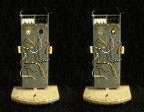
These electronic machines pay "homage" to Norbert Wiener (1894-1964), the scientist and humanist considered to be the father of cybernetics. Wiener's work as a physicist centered on the human control of machines. This suite provides playful experience with the "human control of machines".
When reason fails and we can't make up our mind, how do we decide one way or the other? Shall I vote yes or no? Shall I buy or sell? Is this action morally right or wrong? In such instances these machines work like a flip of the coin. Press a button and one of two lamps remains lit with a decision.
|
|
|
|
|
|
|
The Vatican |
Wall Street |
The White House |
Hamlet |
Generic Decider |
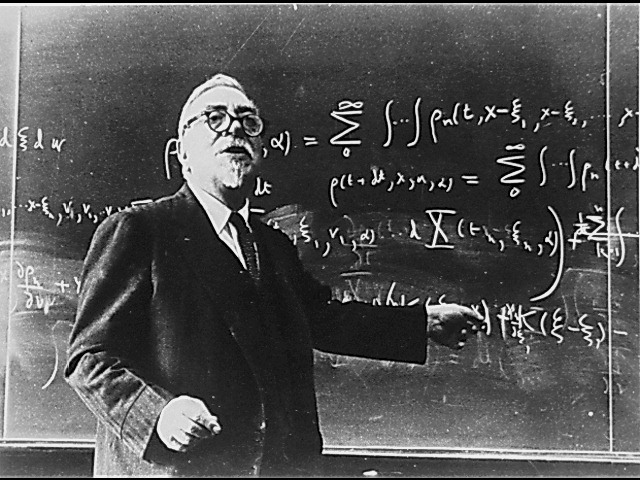
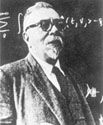
Norbert Wiener, MIT auditorium, date not
known.
UNCERTAINTY & CONTROL
These "Decision Machines" provide a playful electronic trigger that yields a random "one bit" event symbolizing "yes" or "no". This is appropriate playfulness As homage to Wiener who observed that "The functional part of physics cannot escape considering uncertainty and the contingency of events." (See The Human Use of Human Beings: Cybernetics and Society, NY, 1967 Edition, p.15)
Cybernetics is the study of the guidance and control systems we design for our machines. The successful use of machines is correlative to the ease and degree of "human" control. Even our most sophisticated guidance and control systems intermittently fail - they crash, self destruct or even turn on us. So we have reason to fear the machine "out of control".
Here we have a whole suite of machines "out of control". We enter one bit of information which alters the flow of current in such a way that we can never know (or control) which path it will elect. Is this phenomenon fearsome?
This leads us to the Decision Machine I built only for play or for theater:
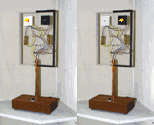 |
To be or not to be: that is the
question. |
"Reasoning" works wonders for us when we have sufficient information and the time to make an "intelligent" decision. But what of those moments when we can't make up our mind, one way or the other? The Decision Machine Suite includes specialized machines symbolizing several of the most difficult decisions we humans have to make, decisions we must make at times with the burden of uncertainty. These include:
-
VOTING as in The White House Yeah or Neah?
-
INVESTING as in Wall Street, Buy or Sell?
-
MORAL DECISIONS as in The Vatican, Right or Wrong?
At times, when rational argument fails, we resort to a "flip of the coin". These machines provide an electronic "flip of the coin" for that decision moment when one is unable to arrive at a decision following reasoned consideration based on available information.
CIRCUIT & CONSTRUCTION
|
|
Detail of wiring on "The White House, yeah or nay". The wood on which the circuit is mounted was salvaged from the 1940 "White House" renovation. Preserved by my wife's uncle Henry Barr it still has its original gray paint. I drilled the small holes to serve as conduits. RV |
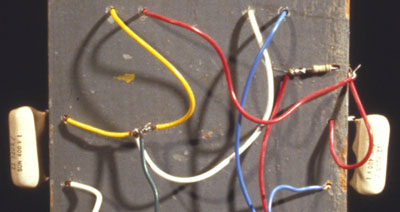
The circuit is mounted symbolically within the context of a structure designed to evoke meanings associated with each specialized machine. Materials used include: wood, metal, plastic, paint, and glue. "The Vatican" has gold leafed lamp reflectors. "The Whitehouse" includes black and white balloting marbles and a piece of wood salvaged from the 1940's Whitehouse renovation. The colored wires in these machines were chosen for evocative artistic effects. However, they are functioning live circuits based on the wiring diagram shown below.
The circuit, for each work, is crafted with diodes, transistors, capacitors, neon lamps, a 'single pole' input switch and a push button decision switch. Power supply is 120 AC household current. At the moment a user presses the machine's decision button the circuit elects only one of two possible paths . The circuit "decision" cannot be predetermined by the user so each machine is an excellent randomizer.
 |
Circuit Diagram 1982
push-button switch
power switch: lower right My schematic was based on a 1979 Decision Maker Project Learning Manual, PPG Electronics, Van Nuys CA.
|
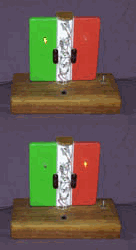
Playful desktop "decision machines" along with small hand held calculators and other electronics were popular from around 1978 on into the 1980's. In 1979 I came upon a circuit schematic for a "Decision Maker" and made my first Generic Decision Machine in 1979 as a Christmas gift. The Green & Red Generic Decider shown here is dated January 1, 1983.
The Circuit: The circuit provides enough current to keep two lamps blinking. At the split moment when a user presses the "push-button" switch on the lower left side of the diagram a change in current allows only one lamp to remain blinking. The side with the blinking light at that split moment identifies the "decision" side.
The web versions simulate the behavior of the physical machines.
Credit note: Tamara Temple assisted me with the code for simulating the physical switching procedure on these web pages. See her blog at: www.tamaratemple.com
Updated notes in
February 2012 , Date corrections in.2018.
HONORING THE PIONEERS
These works honoring Norbert Wiener were the first of my projects honoring pioneers who contributed to the 20th Century information revolution. The development of electronic circuit logic and the human control of digital machines has a very deep history that reaches back to early counting systems. In this series I pay tribute to several pioneers familiar to me in modern history. RV 1998
Norbert Wiener (1894-1964), founder of the science of cybernetics, worked towards an understanding of the principles governing the relationship between computing machines and the human nervous system. He saw the paradox between the relief of human drudgery through the use of robots and the dehumanization of life that came with it. His work, The Human Use of Human Beings (1954), was a revised and edited version of his Cybernetics (1948).
Note 2. Other projects celebrating pioneers:
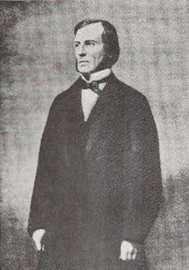
George Boole (1815-1864) An illustrated limited edition of Chapter II from George Boole's Investigation of the Laws of thought. He is considered to be the Father of symbolic logic necessary for information age circuit logic. The code generated illustrations, achieved with Boolean Logic, are visual expressions of "Boole on Boole".
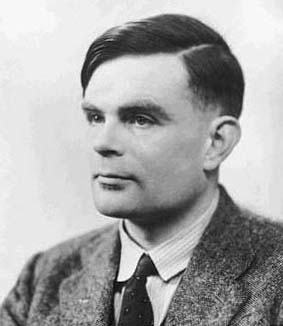
Alan Turing (1912-1954) Alan Turing Projects:
(a) 1995 & 1998. Series of pen plotted drawings in memory of Alan Turing, The Manchester Illuminated Universal Turing Machine. Alan Turing's classic 1936 thesis outlined the algorithmic procedure that underlies the circuit logic of today's general computers.(b) c.1994. A cyberspace presence on this web site in memory of Alan Turing: A Universal Turing Machine